
Can you replace one piece of siding? Most of the time, yes. On most vinyl siding, one board comes off and a new one goes in without taking down the rest of the wall.
Fiber cement and brick can be fixed one piece at a time too. The harder part is often the look. A brand new board may not match boards that have been in the sun for a long time.
How does one vinyl siding board come off?
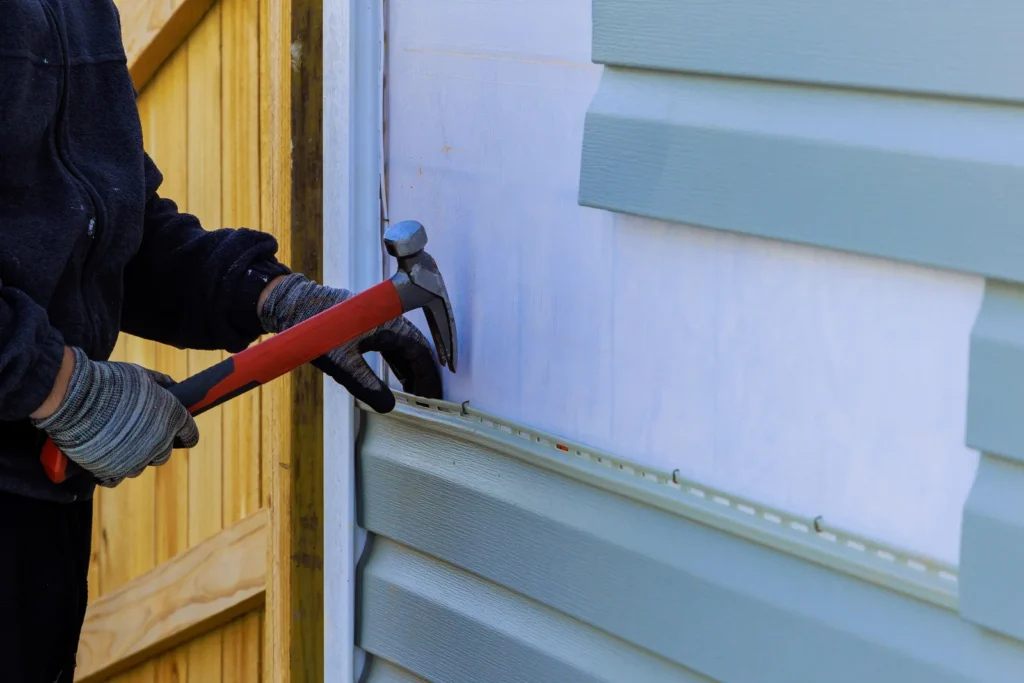
Vinyl boards lock together. The bottom edge of each board hooks onto the board below it. Its top edge is nailed to the wall, hidden under the board above.
To get at those nails, the installer uses a small hooked tool called a zip tool. It slides under the bottom edge of the board above and unhooks it, so that board can be lifted out of the way.
With the nails in view, the damaged board comes out. The new board hooks onto the one below, gets nailed along its top strip, and the board above snaps back down over it.
The nails go in a little loose on purpose. Vinyl grows and shrinks as the weather warms and cools, and a board nailed tight can buckle on a hot day.
Can you replace one piece of siding if it is fiber cement or brick?
Yes, with a different method. Fiber cement boards are nailed to the wall, so the cracked board gets cut or pried out and a new one goes in its place.
The new fiber cement board is then caulked and painted. Fiber cement takes paint well, so a careful paint job often blends the new board in with the wall around it.
On a brick wall, the “piece” is one brick. The damaged brick is cut out, a new brick goes in, and the mortar around it gets filled again. Finding a brick and a mortar color close to yours takes some care.
Will the new board match the old siding?
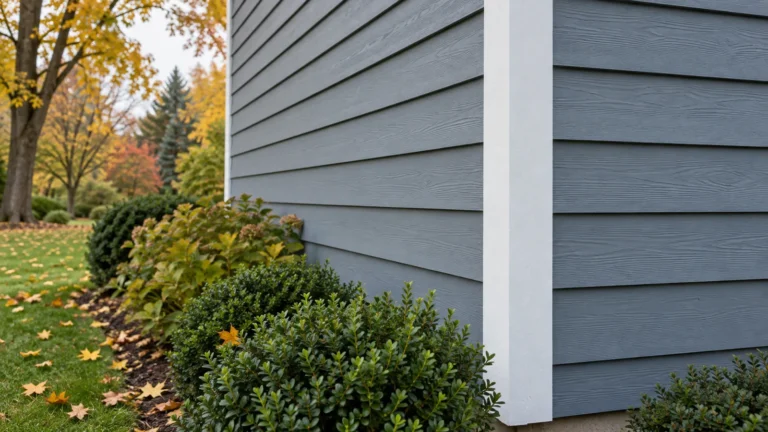
Sometimes it will, and sometimes it will not. Siding fades in the sun, so a wall that has faced the afternoon sun for many summers is lighter than the day it went up.
A new board comes out of the box at full color. Next to faded boards it can look a shade or two darker, even with the same brand and the same color name.
Shape can be a problem too. Siding makers change their board shapes and stop making some colors, so the board on your house may not be sold anymore.
Fiber cement is easier here, because it gets painted. A painter can match the paint to the faded color on your wall. Vinyl is harder, since its color goes all the way through the board.
Before we start a siding repair, our team tells you whether a close match is possible. If the new board is going to look different, you hear that first.
How can you make a new board stand out less?
Look in the garage, the basement or the shed first. Many homes have a few spare boards left from the first install, and those are the right shape even if they have not faded.
Another option to ask about is a swap. A board from a hidden spot, like behind a deck or along a side wall nobody sees, moves to the damaged spot in front. The new board goes into the hidden spot.
On a wall where the color is far off, some homeowners choose to redo the whole side. That way the color change lands at a corner, where the eye expects a break.
When does one board turn into a bigger job?
The first sign is damage that goes past the board. If the wall behind it is wet, soft or stained, the sheathing and insulation need a look before a new board goes over them.
A hail storm can crack boards across a whole side of the house. Ten cracked boards on one wall is a different job from one.
Old vinyl can get brittle and crack as it gets unhooked, so one board can turn into three. A good crew checks how the boards around the damage bend before starting.
Last, the board shape may no longer be made. If nothing close to your profile exists, a single board will look out of place in any color.
Why fix one cracked board at all?
A crack lets water in. Rain and melting snow get behind the board and into the wall, where they can soak insulation and rot the wood sheathing.
Over time, that wet wall can grow mold. A small crack is a much smaller job than a soft, rotten wall behind it.
Also check the flashing and caulk around doors, vents and corners while you look. Water often gets in at those spots, even when the boards look fine.
Can you replace a siding board yourself?
On a first floor vinyl wall, some handy homeowners do. You need a zip tool, a flat pry bar, the right nails and a board that fits your siding shape.
Leave second story boards to a crew with the right ladders. Leave fiber cement and brick to a crew too, because cutting fiber cement makes fine dust, and brick needs mortar work.
Not sure what kind of siding you have? Or does the wall behind the board look wet? Have someone look before you pull anything off.
How do Chicago winters affect siding repair?
Cold makes vinyl stiff. In deep winter cold, boards crack more easily when they get unhooked and bent, so the ones next to the damage can break too.
Our winters also swing above and below freezing. Water that gets into a crack freezes, grows and pushes the crack wider. A small crack in the fall can be bigger by spring.
Paint and caulk on fiber cement need a mild, dry day to set up. In the Chicago suburbs, that can mean a fiber cement repair waits for a better day.
If you spot a cracked board this fall, cover the crack from the rain with a strip of exterior tape. Then have it looked at before a few rounds of freezing and thawing make it bigger.
Who can replace that one board for you?
Our siding repair page explains how we fix vinyl, fiber cement and brick, one piece at a time when the damage allows it. It also shows how we decide when a bigger fix makes more sense.
Call or text (224) 518-0278. We will come out and look at the damaged board and the wall around it. Before any work starts, we tell you whether a close match is possible.