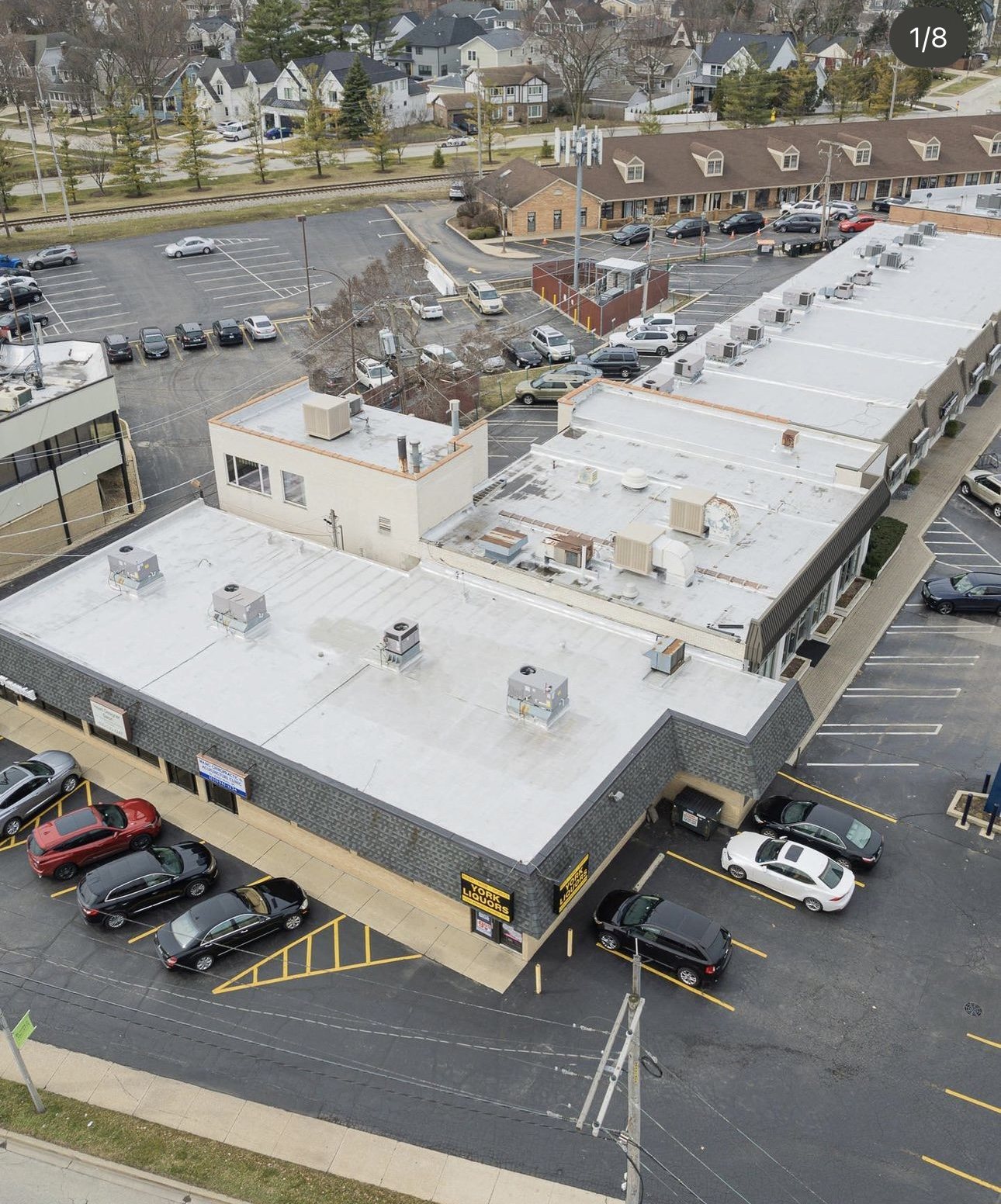

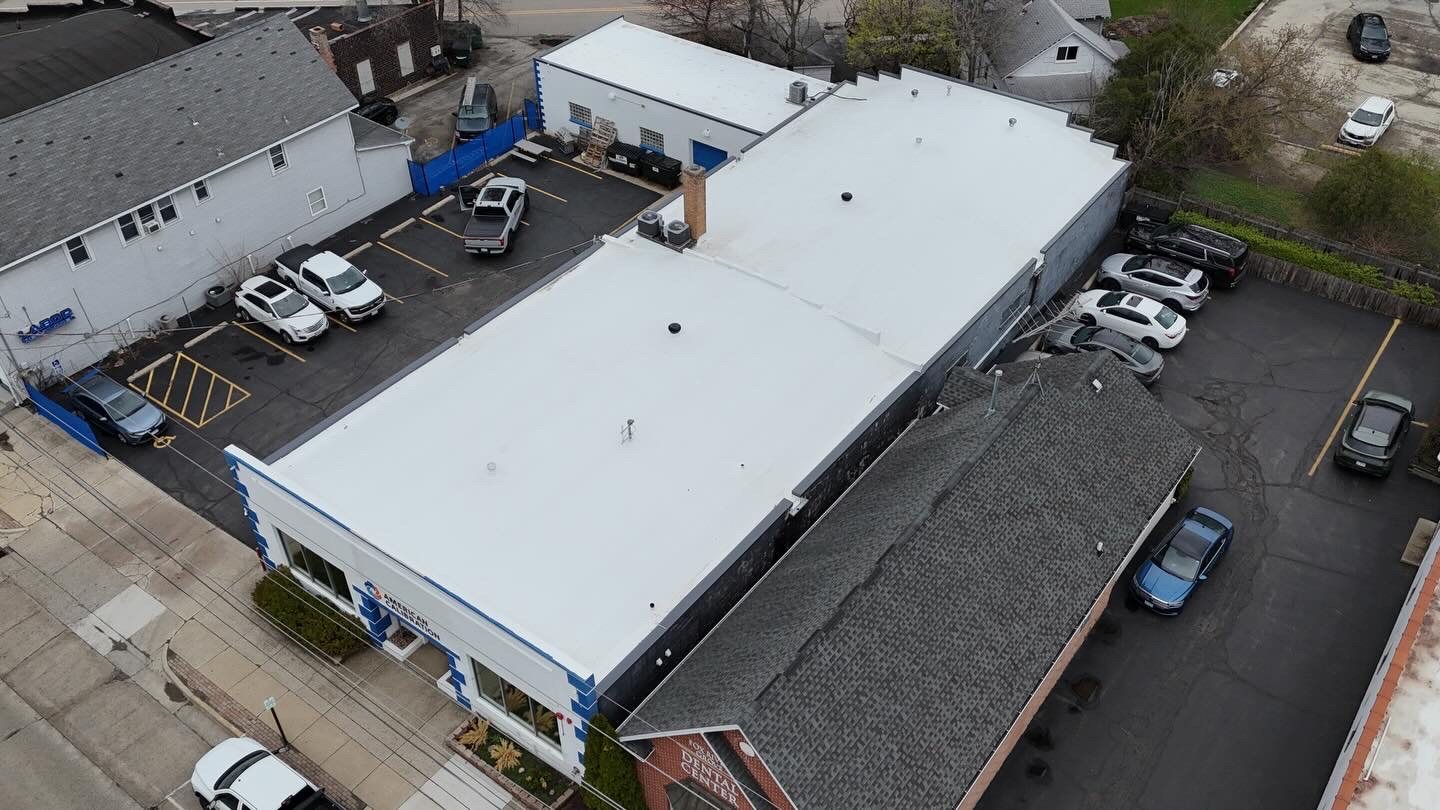
Aerial view of a white commercial flat roof in the Chicago area
RX ROOFING & CONSTRUCTION · CHICAGO & SURROUNDING SUBURBS

PVC Roofing in the Chicago Area.

PVC is the right commercial membrane when standard rubber and thermoplastic roofs don't hold up. Heat-welded seams, chemical resistance, and reinforced construction make it the system to reach for on buildings with grease, oil, or chemical exposure.
01 / The Right System for the Job

For the Right Building, Nothing Performs Quite Like PVC.

PVC roofing is the right system in situations where standard rubber and thermoplastic membranes don’t hold up. Its heat-welded seams, chemical resistance, and reinforced construction make it the preferred choice for buildings with specific exposure concerns, particularly those involving grease, oils, and industrial chemicals that degrade other membrane types. For the right application, nothing performs quite like it.

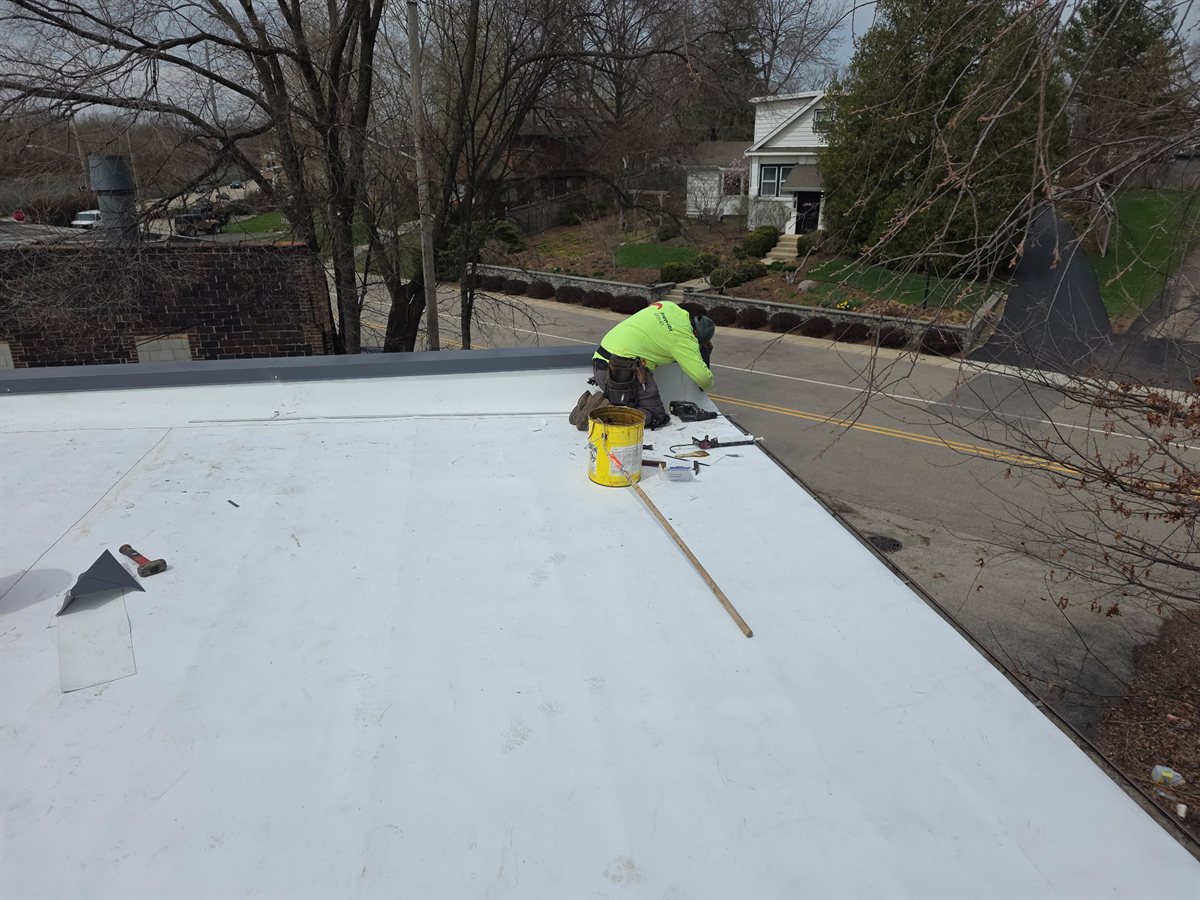
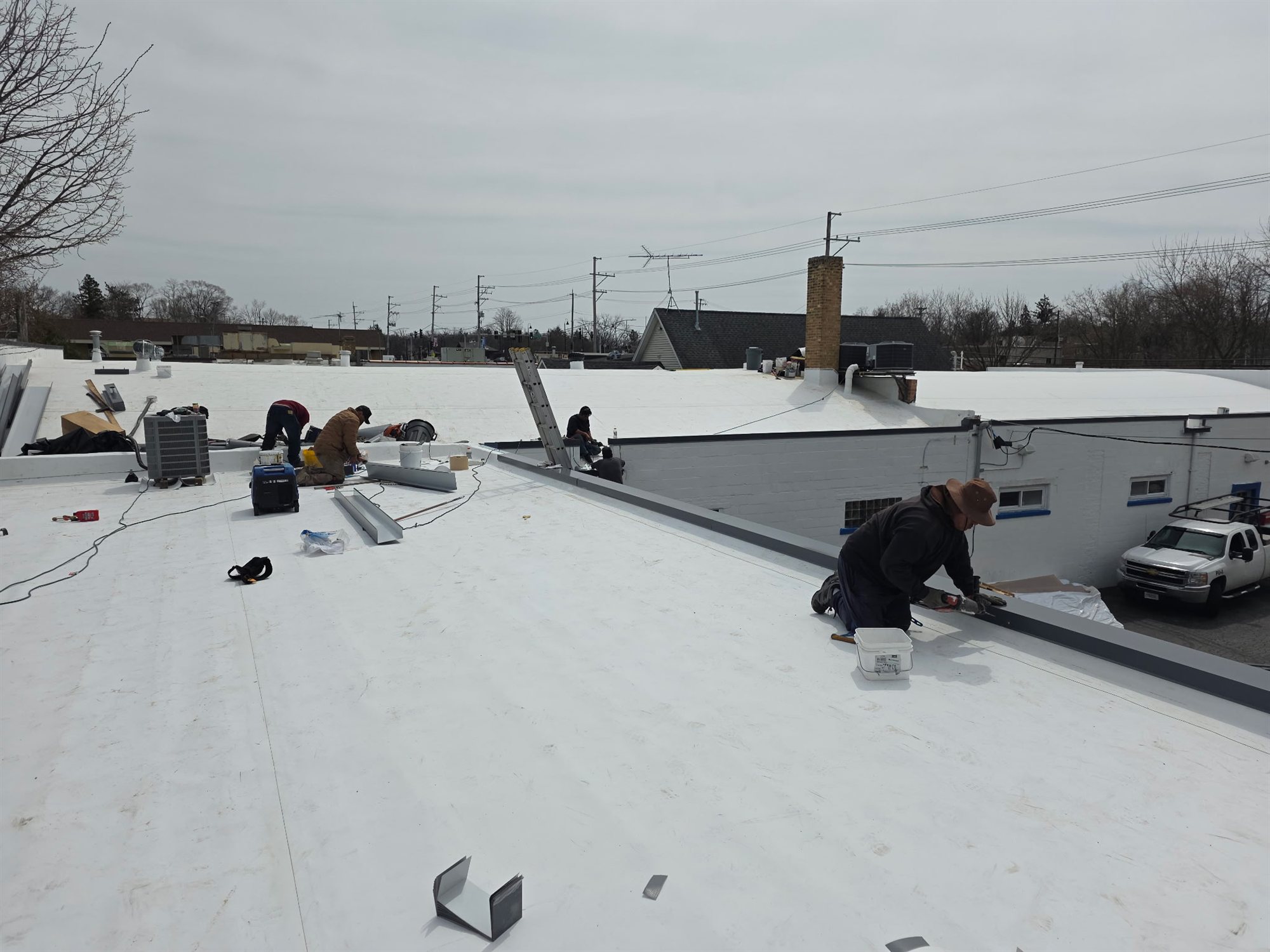
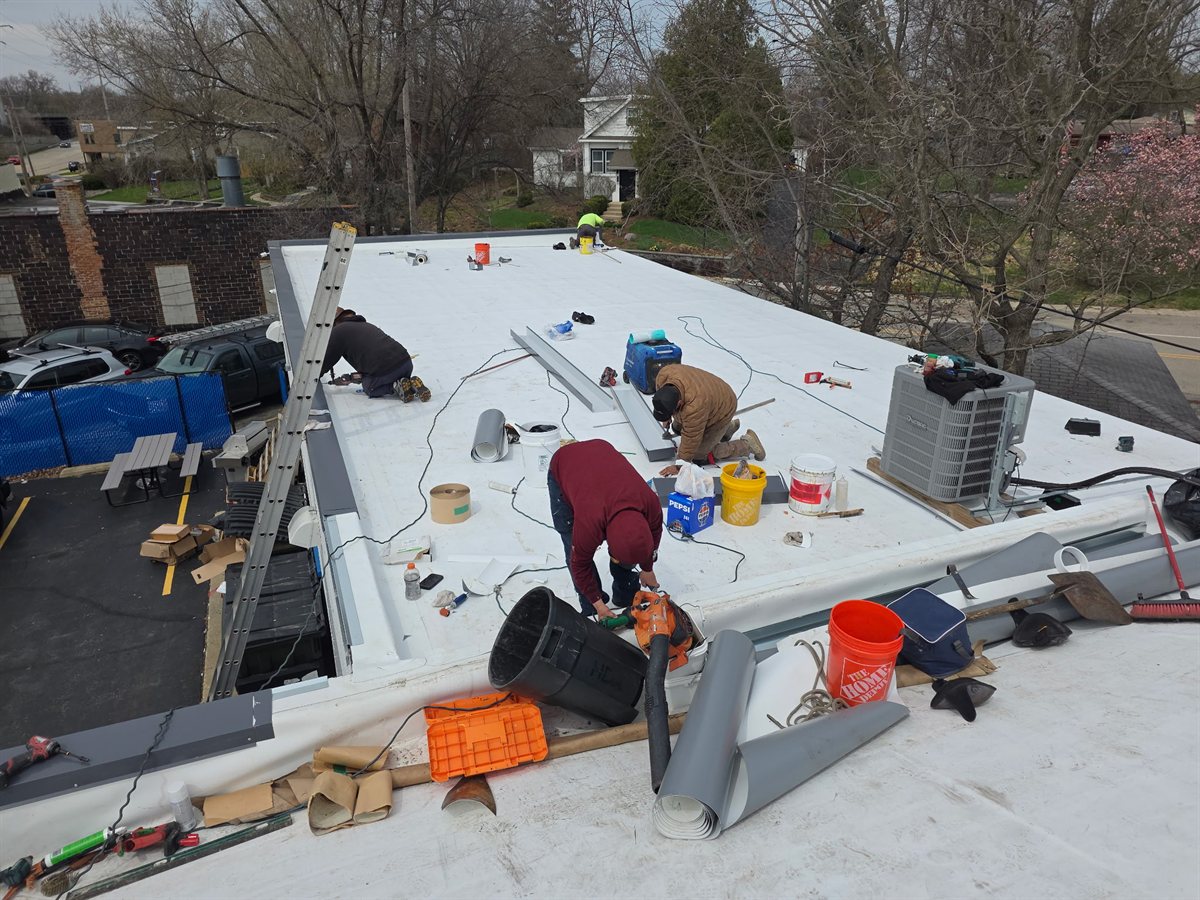
RX Roofing & Construction installs PVC roofing systems on commercial properties throughout the Chicago area. We look at each project on its own to confirm PVC is the right fit for the building’s use and conditions, and we install it with the seam quality and detailing that long-term performance requires.

02 / What PVC Roofing Is

A Reinforced, Heat-Welded Membrane.

PVC stands for polyvinyl chloride. It’s a thermoplastic membrane, similar in installation concept to TPO, but with a different material makeup that gives it its own performance characteristics. PVC membranes are reinforced with a polyester or fiberglass scrim that adds dimensional stability and tear resistance to the base material.

Like TPO, PVC sheets are joined using hot-air welding, which fuses the overlapping membrane edges into one continuous waterproof seam. The heat-welded connection is one of the strongest seam types in commercial roofing. A properly welded PVC seam becomes part of the membrane itself rather than an attached component that can separate.

placeholder

03 / Where PVC Has a Clear Advantage

Built to Stand Up to Grease, Oil, and Chemicals.

PVC’s main strength over other membrane systems is its resistance to grease, animal fats, oils, and many industrial chemicals. Cooking grease in particular damages EPDM and can break down TPO over time. PVC stands up to sustained exposure to grease and oil without the surface degradation that affects other membranes. That makes it the standard specification for these kinds of buildings.

placeholder

Restaurants & Food Service

Kitchen exhaust systems vent grease-laden air that settles on the roof surface around the exhaust penetrations. Standard membranes break down in that zone. PVC holds up where other systems fail.

placeholder

Food Processing & Manufacturing

Similar grease and oil exposure lands on the roof surface from ventilation and day-to-day operations, the kind of contact that wears down lesser membranes.

placeholder

Buildings With Chemical Exposure

Industrial and manufacturing facilities where roof drainage, ventilation, or operations create chemical contact on the roof surface that would degrade standard membranes.

If your building doesn’t have these exposure concerns, TPO or EPDM may give you the same performance at a lower cost. We’ll give you an honest comparison.

04 / PVC in Cold Weather

Once It Settles In, PVC Holds Through Chicago Winters.

PVC performs reliably in cold climates, though extreme cold is one area where it behaves differently from EPDM. EPDM's rubber makeup gives it more flexibility at very low temperatures. PVC gets less flexible in the cold, which is why installing it in freezing conditions takes care and is best done when the weather cooperates. Once installed and thermally conditioned through a season or two, PVC performs well through the Chicago area's seasonal swings.

  • REINFORCED CONSTRUCTION RESISTS FREEZE-THAW STRESS
  • WELDED SEAMS HOLD THROUGH TEMPERATURE MOVEMENT
  • INSTALLED IN CONDITIONS THAT PROTECT THE MEMBRANE
placeholder

05 / Installation & Seam Quality

The Seam Is What Makes or Breaks the Roof.

PVC is installed using methods similar to TPO: fully adhered, mechanically fastened, or in some cases ballasted. The right approach depends on the substrate, the structural constraints, and the project requirements.

As with TPO, seam quality is the defining factor in how long a PVC roof performs. Hot-air welding calls for calibrated equipment, trained operators, and the right ambient conditions. Seams welded too quickly, at the wrong temperature, or with too little overlap will fail long before the material otherwise would. Our crews are experienced with PVC membrane installation and understand the process requirements that separate a long-performing system from a premature failure.

06 / PVC vs TPO vs EPDM

Choosing the Right Membrane for Your Building.

Three single-ply systems cover most commercial flat and low-slope roofs. Here’s the short version of when each one is the right pick.

01

Choose PVC When

Your building has grease, oil, or chemical exposure, seam strength is your highest priority, or you’ve had failures with other membrane types in demanding conditions.

02

Choose TPO When

You want a proven single-ply membrane with strong energy performance at a cost-effective price point, and your building doesn’t have significant chemical exposure.

03

Choose EPDM When

Track record and cold-weather flexibility are priorities, and reflectivity isn’t a main concern for the building.

For a full comparison, see our commercial roofing systems page, which walks through TPO, EPDM, and PVC side by side.

07 / Get Started

Get a PVC Roofing Estimate.

Contact us to schedule a commercial roofing assessment, or call us at (224) 518-0278. We’ll confirm whether PVC is the right fit, get on the roof, and put it in a written scope either way. We’re available Monday to Friday 7am to 7pm and Saturday 7am to 5pm.