

Roof Leak Repair, Fixed at the Source.
An active roof leak needs to be fixed where the water is actually getting in. We find the real source, stop the leak, and repair it the right way. We track water back to its entry point, we don't just patch the stain on your ceiling and call it done.
01 / Roof Leak Repair
A Leak Has to Be Fixed Where the Water Gets In.
An active roof leak needs to be fixed at the source. Patching the symptom, a ceiling stain, a damp spot in the attic, or a drip from a light fixture, without finding where the water is entering doesn’t solve the problem. It delays it while the damage spreads.
RX Roofing & Construction provides roof leak diagnosis and repair throughout the Chicago area. We are familiar with the roofing systems common to this market, and we find leaks the right way: by tracing the water path back to where it’s actually entering the building, not just where it’s showing up inside. If your leak is active, call us and we’ll get a crew out to find it and stop it.
02 / Why Leaks Hide
Leaks Are Harder to Find Than They Look.
Water doesn’t travel straight down once it gets inside a roof system. It follows the path of least resistance along roof boards, rafters, and insulation until it finds a place to pool or drip through a ceiling. A stain on your ceiling in one room often has nothing to do with the part of the roof directly above it.
Flashing Failures
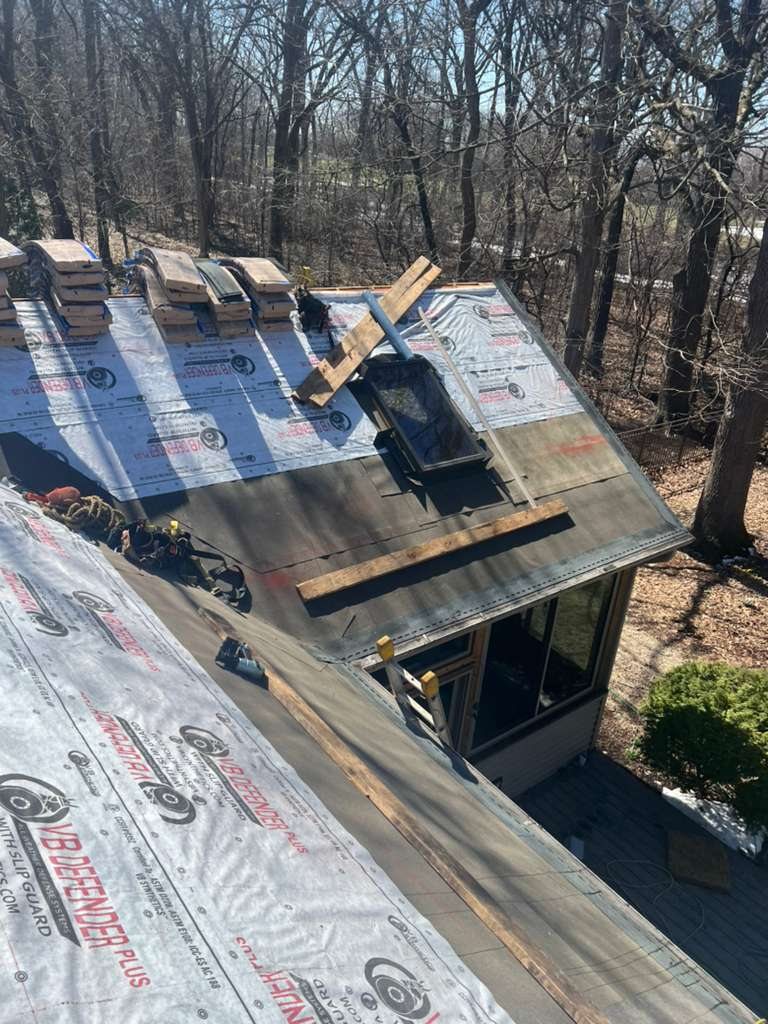
Failed or lifted flashing around chimneys, skylights, pipe boots, and vent stacks is one of the most common entry points. These details take the most weather and wear out first.
Shingles & Underlayment
Cracked or missing shingles expose the underlayment, and damaged or improperly lapped underlayment beneath the shingles lets water reach the deck.
Valleys
Compromised valleys, where two roof planes meet and water volume is highest, are a frequent leak source when the metal or membrane has worn through.
Roof Penetrations
Improperly sealed roof penetrations from previous work let water sneak past. Old caulk and rushed repairs fail before the roof does.
Boot Seals
Deteriorated boot seals around plumbing stacks crack with age and sun exposure, and they’re an easy spot to miss from the ground.
Flat & Low-Slope Roofs
On flat or low-slope commercial roofs, seam failures, blistering, and ponding water are the most common leak sources. The entry point and the visible damage inside a building are often in completely different spots.
03 / How We Find and Fix the Leak
We Start From the Inside Out, Then Fix It Properly.
We look at where the damage is showing in the interior, then track the water path back through the attic or ceiling structure toward the roof surface. Once we’ve identified the likely entry zone, we inspect that area of the roof in detail.
For residential roofs, we examine every potential point of failure in the zone: flashing, shingles, underlayment, penetrations, and transitions. We look for the exact spot where weather protection has failed.
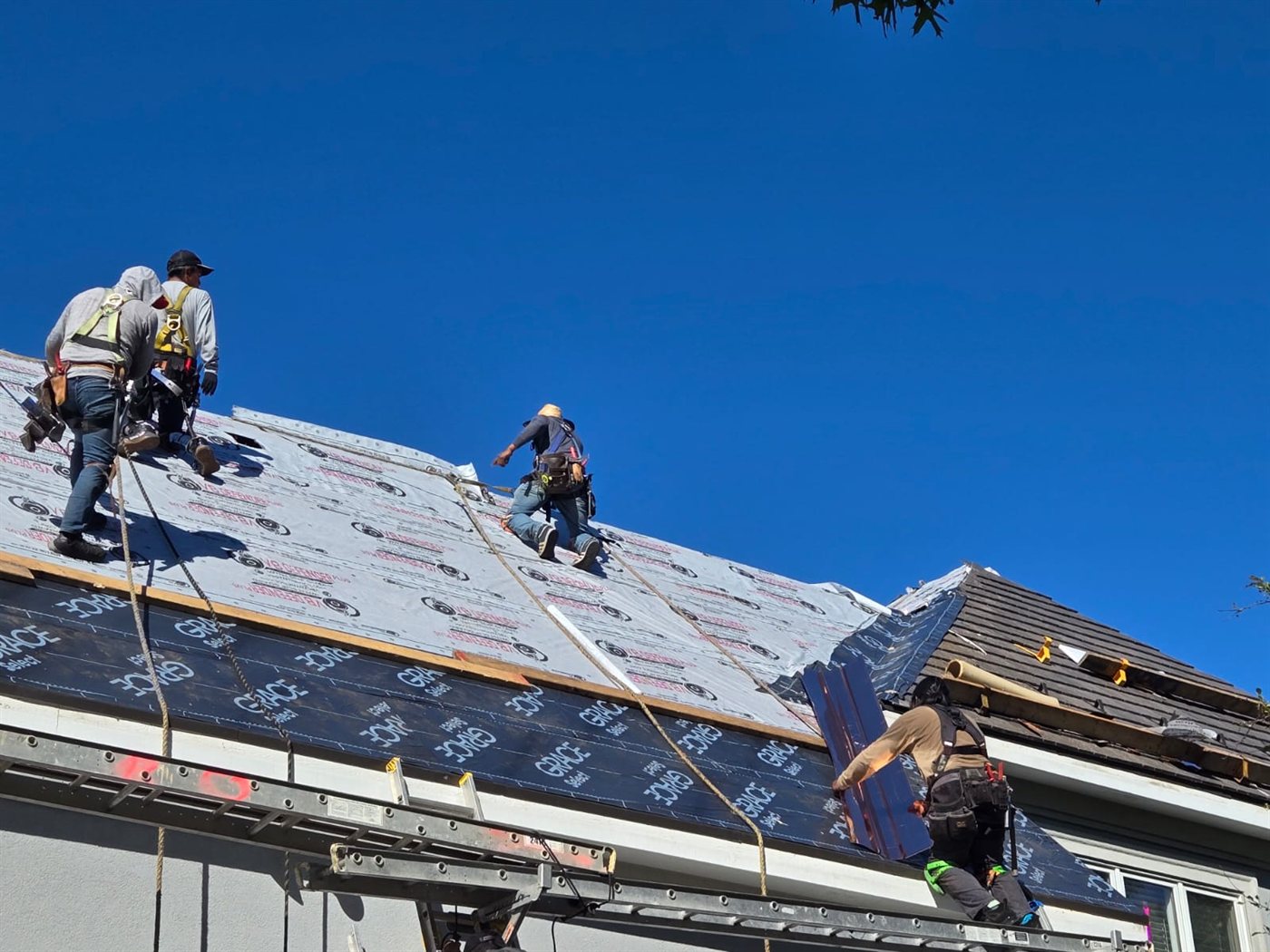
When we find it, we fix it properly. That may mean reflashing a chimney, replacing a section of shingles and underlayment, resealing a penetration, or addressing a valley that has worn through. We don’t tape over problems and call it done. If the fix requires replacing material, we replace material. For commercial roofs with an active leak, we stop the infiltration first with a proper temporary measure if needed, then address the full repair permanently.
- We trace the water path back to the entry zone
- We inspect every failure point in that area
- We replace material when the fix calls for it
04 / Storm Damage and Leaks
Many Leaks Show Up Long After the Storm.
Many leaks in the Chicago area follow a weather event. Hailstorms crack and bruise shingles in ways that don’t fail immediately, and high winds lift and displace flashing that was previously well-sealed. A roof can take a storm hit in spring and not develop an active leak until the next significant rain or several months later.
If your leak appeared after a storm, the damage is likely covered under your homeowners insurance policy. We document the source and condition of the damage with photos and written assessments, then work directly with your insurance company through the claims process. You don’t have to manage the adjuster communication yourself.
- Storm damage often hides until the next big rain
- We document the source with photos and written notes
- We work directly with your insurer
05 / Don’t Wait on a Leak
Every Rain After an Unrepaired Leak Causes More Damage.
What starts as a small entry point grows as freeze-thaw cycling works on the opening. Water damage to roof boards, insulation, and ceiling materials accumulates quickly. A repair that costs a modest amount today can become a much larger project in one winter if it’s put off.
If your roof has been repaired before and the leak returned, that’s a sign the original repair didn’t address the true source. We trace it properly the first time.
For roofs where leak activity points to more widespread material failure or age-related deterioration, we’ll let you know when a repair no longer makes financial sense versus a full replacement. See our roof repair page for the repair vs. replacement guidance, or our residential roofing page for replacement options.
06 / Common Questions
Roof Leak Questions, Answered Straight.
Water doesn’t travel straight down once it gets into a roof system. It follows the path of least resistance along roof boards, rafters, and insulation until it finds a place to drip through. A stain in one room often has nothing to do with the roof directly above it, which is why we trace the water back to the real entry point instead of patching the spot you can see.
Common entry points include failed or lifted flashing around chimneys, skylights, pipe boots, and vent stacks; cracked or missing shingles; compromised valleys where two roof planes meet; improperly sealed penetrations from previous work; deteriorated boot seals around plumbing stacks; and damaged underlayment. On flat or low-slope roofs, seam failures, blistering, and ponding water are the usual sources.
When a leak returns after a repair, it usually means the original work didn’t address the true source. Someone fixed where the water showed up instead of where it was getting in. We start from the inside, trace the water path back to the entry zone, and fix the actual failure so it stays fixed.
If your leak appeared after a storm, the damage is likely covered under your homeowners policy. We document the source and condition with photos and written assessments, then work directly with your insurance company through the claims process, so you don’t have to manage the adjuster communication yourself.
Call or text us and we’ll get a crew scheduled to find and stop the leak. We respond quickly so a small problem doesn’t turn into a big one. We’re available Monday to Friday 7am to 7pm and Saturday 7am to 5pm.
07 / Get Started
Get the Leak Fixed.
Contact us to schedule a leak inspection and repair, or call us at (224) 518-0278. We respond quickly, find the real source, and fix it properly. We serve homeowners and property owners throughout Chicago and the surrounding area. We’re available Monday to Friday 7am to 7pm and Saturday 7am to 5pm.