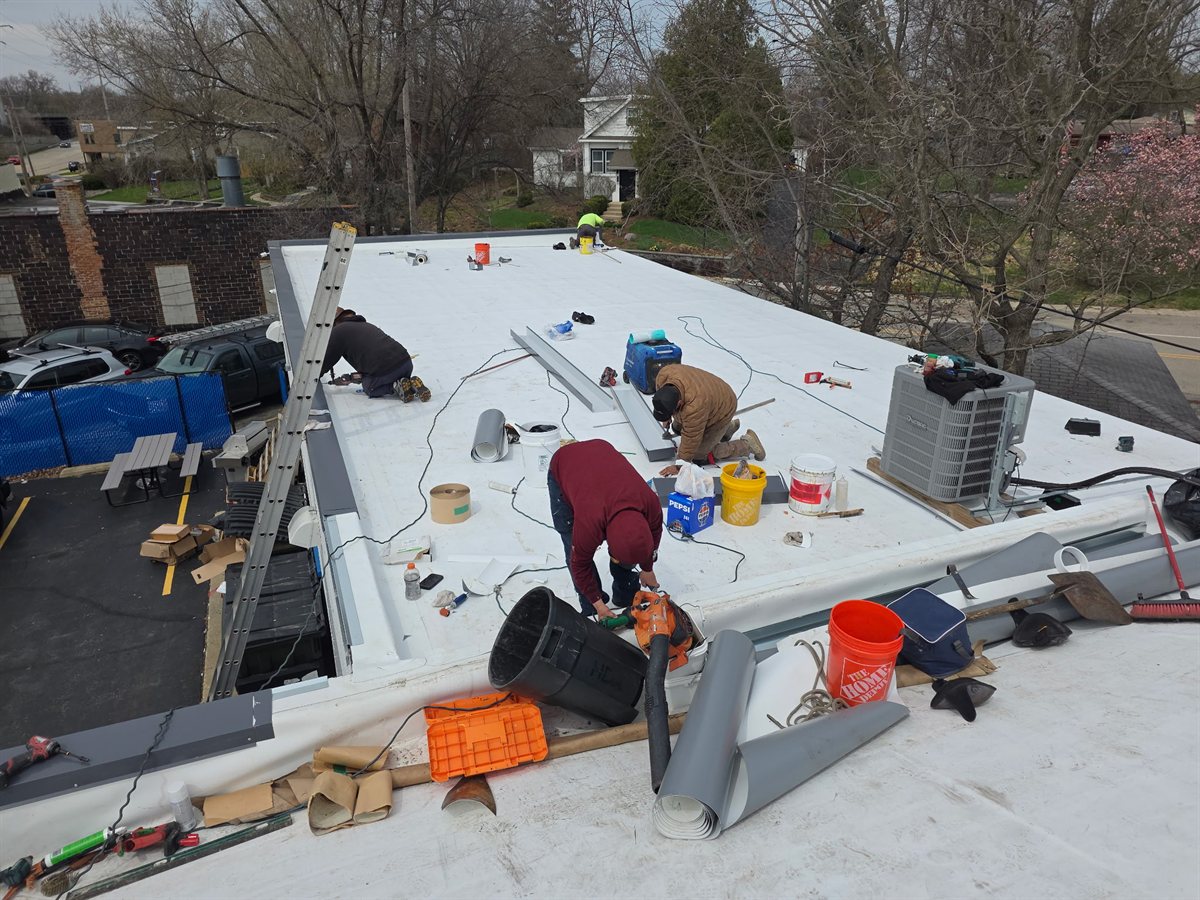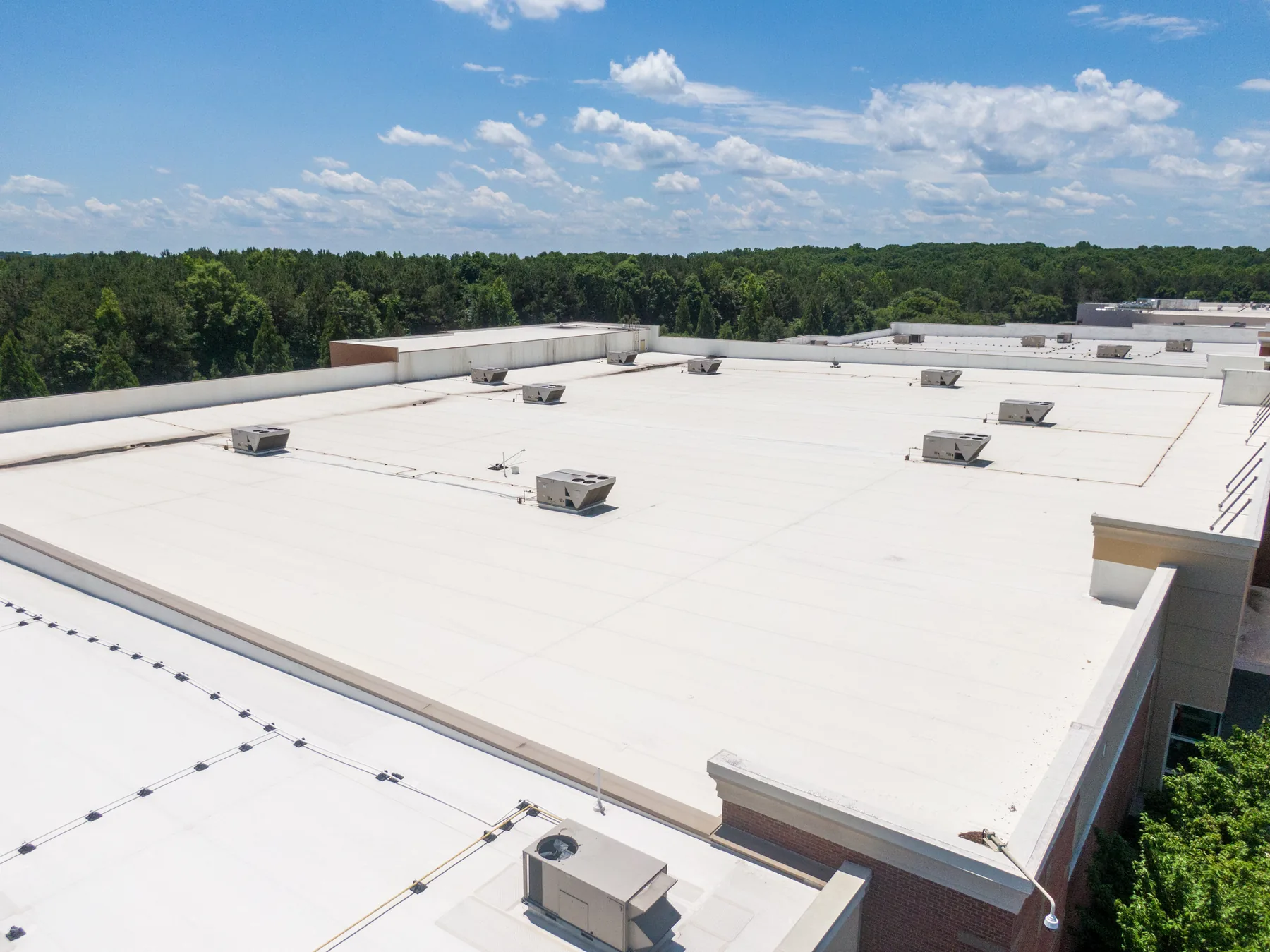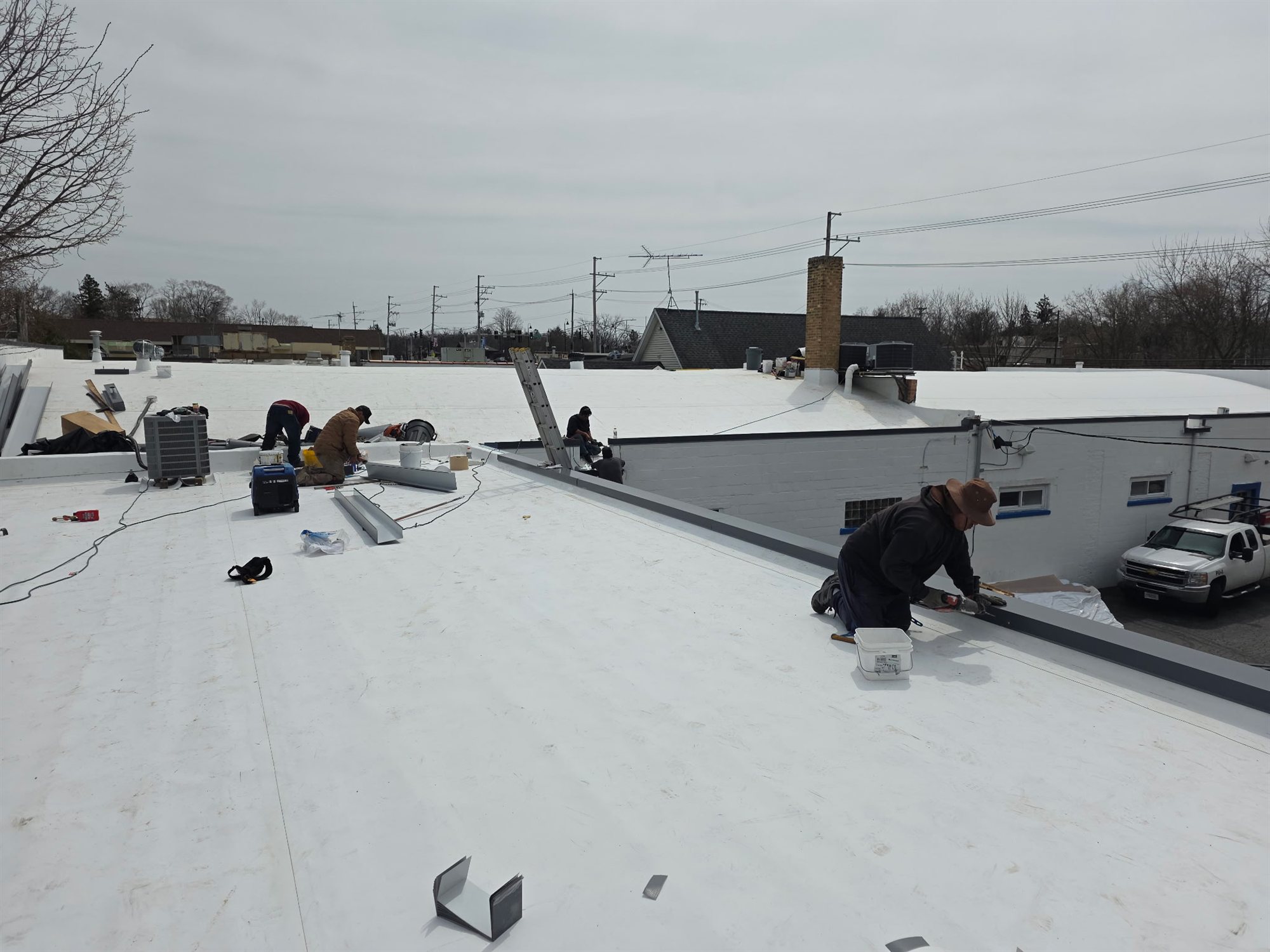
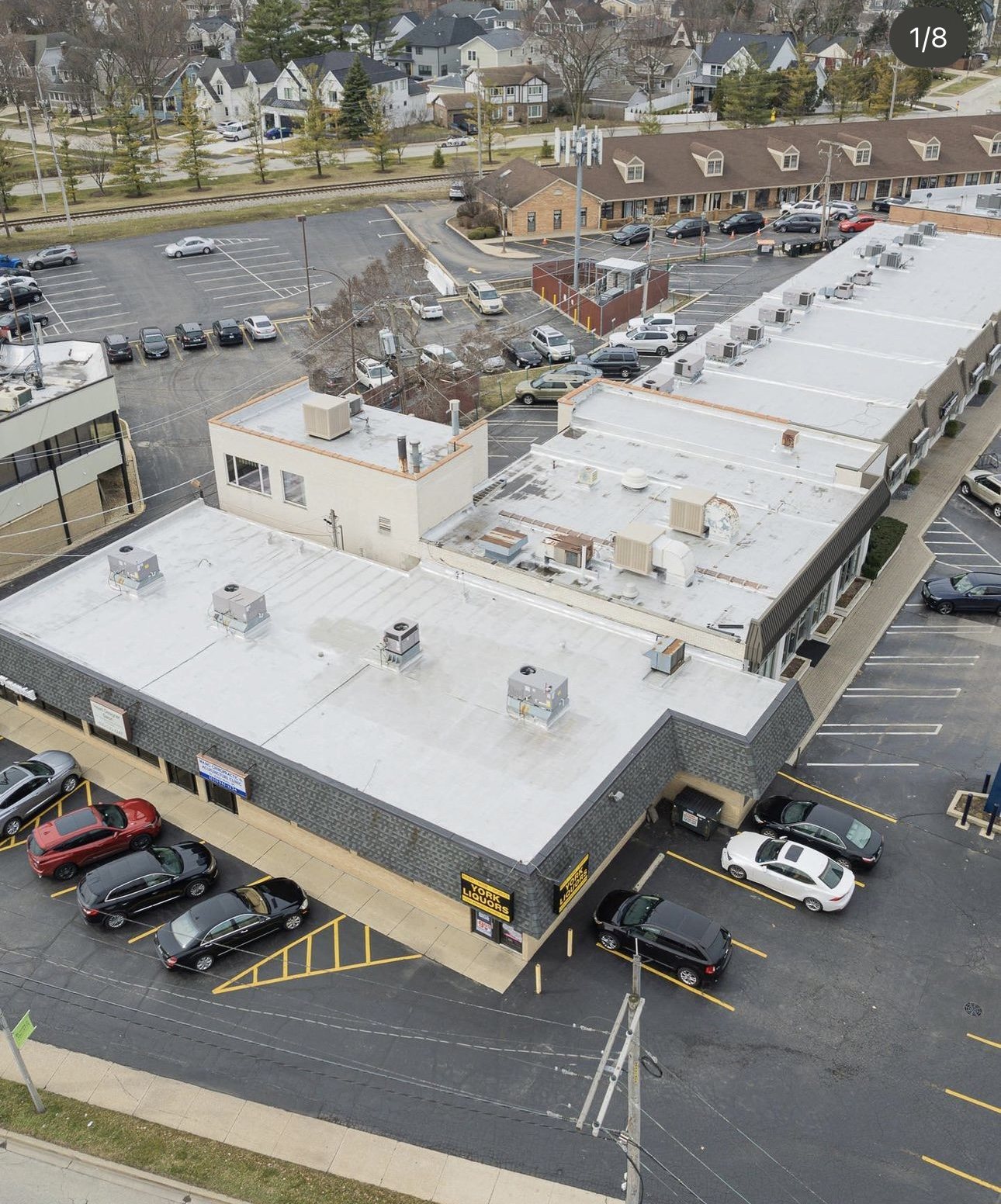

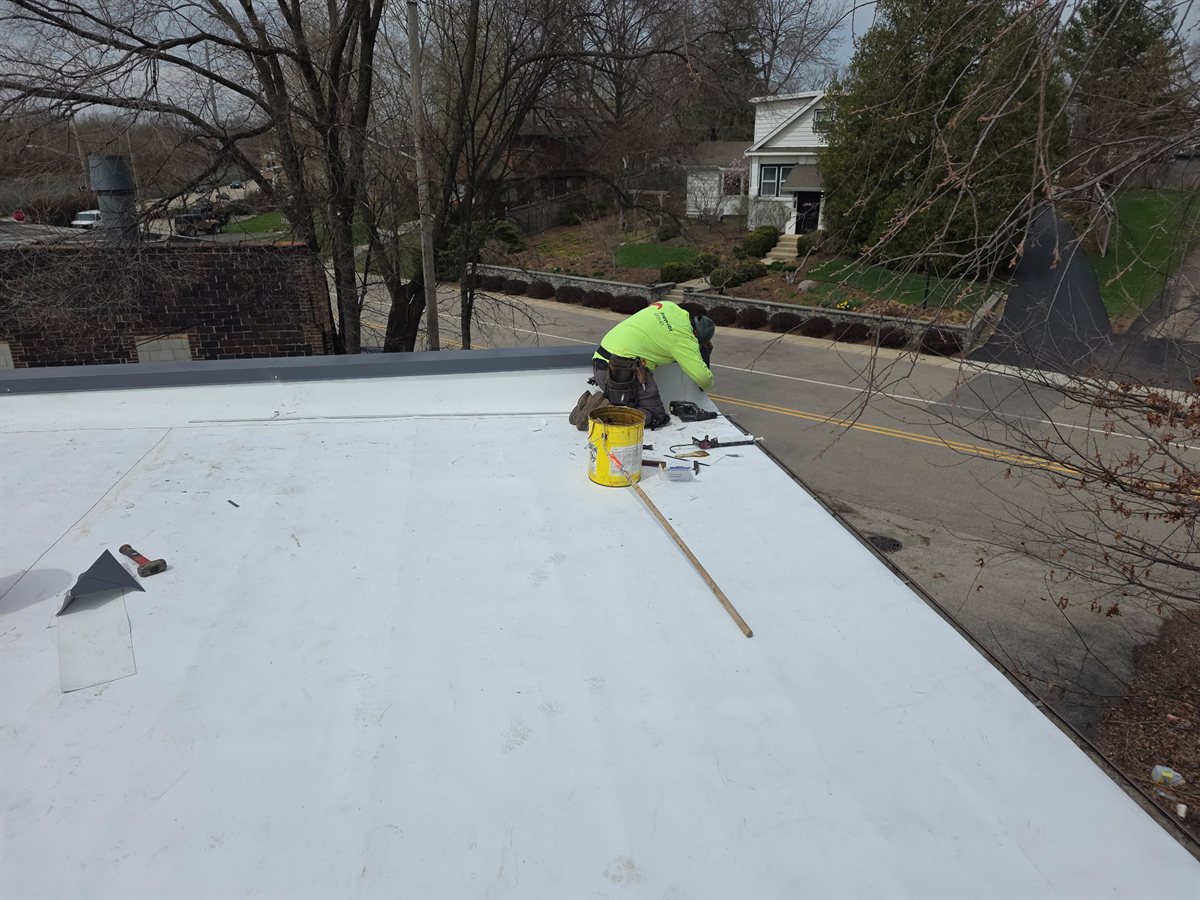
Aerial view of a white commercial flat roof in the Chicago area
RX ROOFING & CONSTRUCTION · CHICAGO & SURROUNDING SUBURBS

TPO Roofing in the Chicago Area.

TPO has become one of the most commonly specified commercial membrane systems in the country, and the reasons are practical. It reflects heat, holds up across temperature extremes, and balances durability against cost. We install and maintain TPO on commercial buildings throughout the Chicago area.

01 / What TPO Roofing Is

A Single-Ply Membrane Built for Flat and Low-Slope Roofs.

TPO stands for thermoplastic polyolefin. It’s a single-ply roofing membrane installed in large sheets across a flat or low-slope roof surface. The sheets are joined at the seams using hot-air welding, which fuses the material into a continuous waterproof plane. A properly welded TPO seam is one of the stronger waterproofing connections available in commercial roofing.

TPO is manufactured in white and light colors. That’s not just an aesthetic choice. The reflective surface bounces solar radiation away from the building instead of absorbing it, which lowers roof surface temperatures and the heat load passed into the building below.

RX Roofing & Construction installs and maintains TPO roofing systems on commercial properties throughout the Chicago area. We’re licensed, bonded, and insured for commercial membrane work, and we install TPO with the seam quality and substrate preparation the system’s performance depends on.

02 / TPO IN THE CHICAGO CLIMATE

A Roof That Moves With the Seasons Instead of Cracking.

The Chicago area puts commercial roofing through a demanding seasonal cycle. Winter brings sharp temperature drops, ice, and snow load. Spring and summer bring heat, UV exposure, and hail. The freeze-thaw cycling that repeats through the shoulder seasons is especially hard on roofing seams and penetration details.

TPO handles this cycle well. Its thermoplastic makeup allows for movement and flexibility across temperature swings without the cracking that can happen in more rigid materials. The heat-welded seams, when installed correctly, hold their integrity through repeated expansion and contraction better than adhesive-bonded connections. TPO also stands up reasonably well to hail. It won't prevent every bit of surface damage in a severe storm, but its flexibility means it absorbs impact without the hard fracturing more rigid materials can experience.

  • FLEXES THROUGH FREEZE-THAW CYCLING
  • WELDED SEAMS HOLD THROUGH MOVEMENT
  • ABSORBS HAIL IMPACT WITHOUT HARD FRACTURING
03 / TPO Installation Methods

Three Ways to Attach the Membrane.

TPO can be installed several ways depending on the building’s structure, substrate, and design requirements. We’ll recommend the right method based on your building’s structure, use, and local wind requirements.

placeholder

Mechanically Attached

The membrane is fastened to the roof deck through the insulation layer using screws and plates. This common method works well on most commercial buildings and provides good uplift resistance.

placeholder

Fully Adhered

The membrane is bonded directly to the insulation using adhesive. This gives a smooth, tight surface with fewer penetrations and is preferred in high-wind settings or where a clean profile matters.

placeholder

Ballasted

The membrane is laid loosely over the insulation and held down by ballast, typically rounded stones or pavers. It’s used less often on new construction but can fit specific situations.

04 / Seam Quality

Seam Quality Decides How Long a TPO Roof Lasts.

TPO’s durability is tied directly to seam quality. The membrane itself is consistent and manufactured to tight tolerances. What separates a long-performing roof from a premature failure is almost always the installation, specifically how the seams are welded and how penetrations are detailed.

Hot-air welding takes trained operators, properly calibrated equipment, and the right conditions. Cold, wet, or windy weather calls for adjustments in the process. Seams welded too fast, at the wrong temperature, or without enough overlap will fail sooner than the material should. We use properly calibrated welding equipment and experienced crews, and we check seam integrity after installation rather than assuming it.

placeholder

05 / Maintenance & Lifespan

A Well-Installed TPO Roof Can Last 20 Years or More.

A well-installed TPO membrane on a commercial building in this climate can perform for 20 years or more with proper maintenance. That lifespan shortens on systems that aren’t inspected regularly, where minor seam issues and penetration failures are left unaddressed until they turn into leaks.

We recommend semi-annual commercial roof inspections for TPO systems: one in spring after winter stress, and one in fall before snow season. These visits catch seam wear, flashing separations, and drainage problems before they become active leaks. We provide a written report after each visit, which is useful for capital planning and warranty documentation.

20+ Year Lifespan

With proper maintenance, a well-installed TPO membrane performs for two decades or more in the Chicago climate.

Spring & Fall Visits

One inspection in spring after winter stress and one in fall before snow season catches small issues early.

Written Reports

A written report after every visit, built for capital planning and warranty documentation your team can file.

06 / Is TPO Right for Your Building?

A Strong Default for Most Flat and Low-Slope Roofs.

TPO is a strong default choice for most flat and low-slope commercial buildings in the Chicago area. It’s worth comparing against EPDM and PVC when your building has specific chemical exposure concerns, or when you’re replacing an existing system with unique substrate conditions.

For a comparison of all three membrane systems, see our commercial roofing systems page. For more on the other two single-ply options, visit our EPDM roofing page and PVC roofing page.

TPO

A white, reflective membrane that lowers cooling loads. A strong default for most flat and low-slope buildings.

EPDM

A rubber membrane known for cold-weather flexibility and a long track record on Midwest buildings.

PVC

Strong chemical resistance and heat-welded seams, a good fit for restaurants and facilities with grease exposure.

07 / Get Started

Get a TPO Roofing Estimate.

Contact us to schedule a commercial roofing consultation, or call us at (224) 518-0278. We get on the roof, tell you the truth about what we find, and put it in a written summary either way. We’re available Monday to Friday 7am to 7pm and Saturday 7am to 5pm.