
A commercial roof claim moves through six stages: inspection, written scope, filing, the adjuster visit, the settlement, then the work. The part most building owners are unprepared for is that documentation decides the claim, and it has to exist before the adjuster arrives.
A commercial claim is more involved than a homeowners claim. The documentation requirements are higher, the systems on the roof are more complicated, and there is usually far more money on the table.
How is a commercial claim different?
Three ways.
The roof is a system instead of a surface. Membrane roofs like TPO, EPDM and PVC fail in ways nothing on a house does. Hail damage to a membrane can shorten the system’s life without leaking a drop today.
More of the building is attached to the claim. Siding, metal flashing, gutters and HVAC equipment screens are all part of the building envelope. Storm damage to them often belongs in the same claim.
The policy is more complicated too. Commercial policies can include cover a homeowners policy never does, such as business interruption if major damage forces a partial or full closure.
Stage one: the inspection
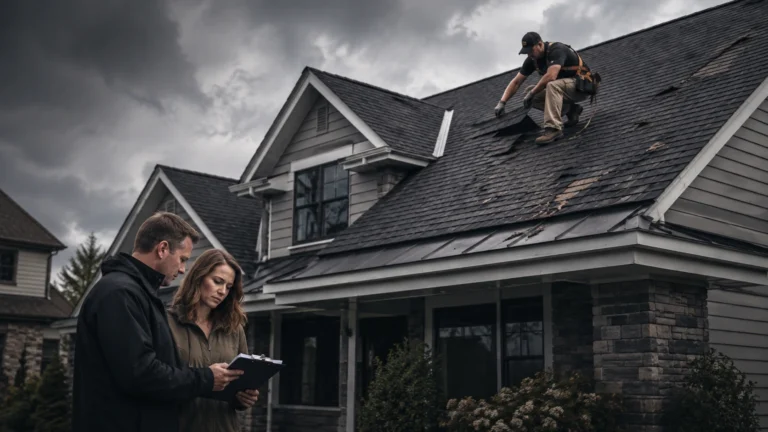
Somebody gets on the roof and goes over all of it after the storm.
That means the membrane condition, the flashing, the seams, the penetrations, the equipment curbs and the structural elements. It also means the rest of the building envelope while you are up there, because the same hail hit the siding and the screens.
Do this early. The gap between the storm and the inspection is where claims start to get argued about.
Stage two: the written scope
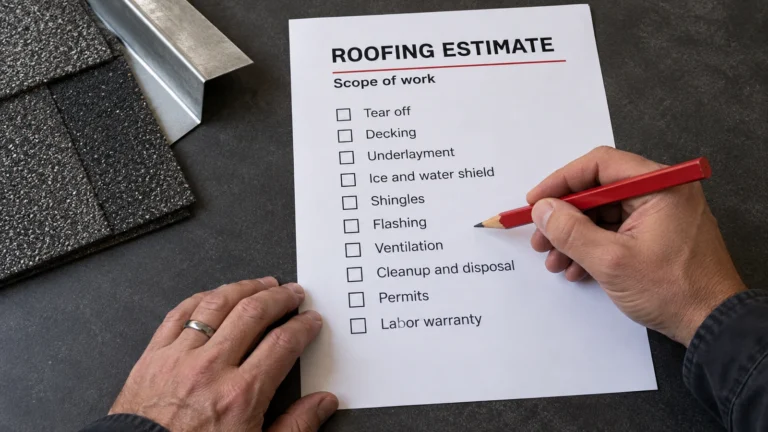
This is the document your claim is built on.
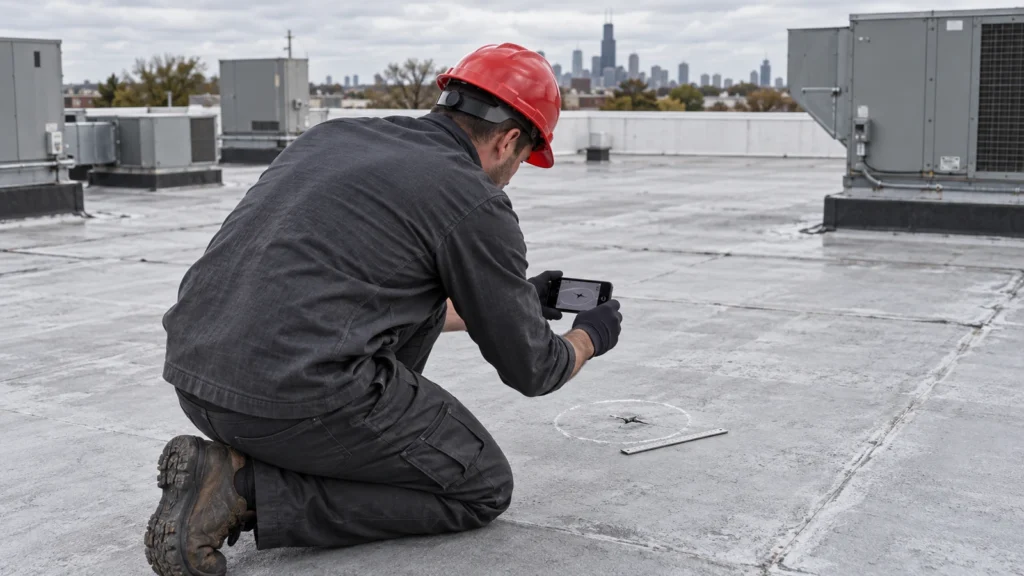
A scope quantifies the damage and spells out the work needed to bring the building back to the condition it was in before the loss. Photographs go underneath it: roof membrane condition, flashing failures, structural damage and anything else the storm touched.
A claim with thorough documentation behind it is a different conversation from one without. This single step separates a claim that settles properly from one that drags.
Stage three: filing
You file with your carrier, with the scope and the photos ready to go instead of promised later.
Get the date of loss right. Carriers care about it, and on a building that has been through more than one storm it is the first thing they will ask about.
Stage four: the adjuster inspection
The carrier sends an adjuster out to look at the building.
Your roofing contractor should be there to walk the adjuster through the findings and answer questions while everyone is standing on the roof. An adjuster seeing a roof alone, with no context, is how damage gets written off as wear.
The adjuster is drawing a line between storm damage and everything else. Commercial policies generally cover direct physical loss from covered weather events, including hail, wind and lightning. What is generally excluded is deferred maintenance, gradual wear and damage that predates the storm.
Claims are won and lost on that line, and it explains why documentation from before the adjuster arrives counts for so much.
Stage five: the settlement
The carrier comes back with a number and a scope of their own.
Sometimes it matches yours. Often it is lighter than what the building needs, because something got missed, membrane damage was read as age, or attached components were left out.
A low or incomplete scope is not the end of the process. You answer it with the documentation, item by item, and it gets revised. This is normal, and it is worth pushing back when the evidence supports you.
Stage six: the work
Once the scope is agreed, the work gets scheduled and done, and the paperwork closes out with the carrier.
An occupied commercial building needs planning at this stage that a house never does. Tenants, access, deliveries and the business trading through a roof replacement are all part of the job.
Where do commercial claims stall?
Four places, and all four are avoidable.
- The inspection happened too late. A long gap after the storm makes it easier to call the damage something else.
- The documentation was thin. A scope with no photographs behind it does not survive review.
- Nobody was there for the adjuster visit. The damage does not explain itself.
- Attached components were left out. Siding, gutters and equipment screens took the same hail and get forgotten.
What to do if your building was hit
Get it inspected while the storm is recent. Make sure the whole envelope gets looked at instead of only the roof, and that somebody documents all of it in writing before you file.
Our commercial roof damage claim page walks through how we document a building, write the scope and stand with you at the adjuster inspection. Call or text and we will get out to look at it.