
Can you replace a roof in winter? Yes. Crews in the Chicago suburbs put new roofs on in the cold, on dry days and with a few extra steps for the shingles.
Cold makes shingles stiff, slows down the seal strips and cuts the workday short. A good crew plans for each of those, and the forecast picks the days.
This post covers what the cold does to a new roof, how crews deal with it, and when waiting for spring is the better choice.
Can you replace a roof in winter around Chicago?
Yes. Shingles, underlayment and flashing go on the same way in January as they do in June. The difference is the care the crew takes with each layer.
Most winter installs happen on days above freezing with no snow or rain in the forecast. Our winters bring dry stretches between the cold snaps, even in the middle of January.
A roof can also go on below freezing. That takes more care with the materials, and some products list a lowest temperature for installing them.
What does cold weather do to asphalt shingles?
Asphalt shingles turn stiff in the cold. A stiff shingle can crack when it gets bent over a ridge or into a valley.
Nails are the second worry. In a brittle shingle, a nail driven too hard can punch through it or split the shingle around the nail head.
Crews turn down the air pressure on their nail guns for cold days. They also check the nails as they go, because a nail that breaks the shingle leaves a spot for water to get in.
Shingle bundles do best in a warm place until they go up. On cold days, many crews bring up only a few bundles at a time, so the shingles do not freeze on the roof.
Will new shingles seal in cold weather?
Each asphalt shingle has a strip of adhesive on it. The sun warms that strip, and it bonds to the shingle laid over it so wind cannot lift the edge.
In cold weather the strip may not bond right away. Often the seal forms on the first warm, sunny days of spring.
Until that happens, a strong gust can lift the edges of unsealed shingles.
Shingle makers set cold weather steps for their own products to guard against that. A common one is hand sealing, where the crew puts small dabs of roofing cement under each shingle tab.
The maker’s instructions say how many dabs to use and where they go. A crew that follows them gives the roof a bond until spring finishes the job.
Self sealing underlayments and roofing adhesives have temperature needs too. Each product’s label lists the lowest temperature for putting it down, and a careful crew reads it before the job.
What happens to snow and ice on the roof deck?
Snow and ice come off before the old shingles do. The crew clears the roof first, then tears off one section at a time.
The deck has to be dry before anything goes on it. Underlayment laid over frost or ice does not stick well, and moisture trapped under it can rot the wood later.
Many winter mornings start with frost on the roof. Crews often wait for the sun to clear it, so the workday starts later and ends at dusk.
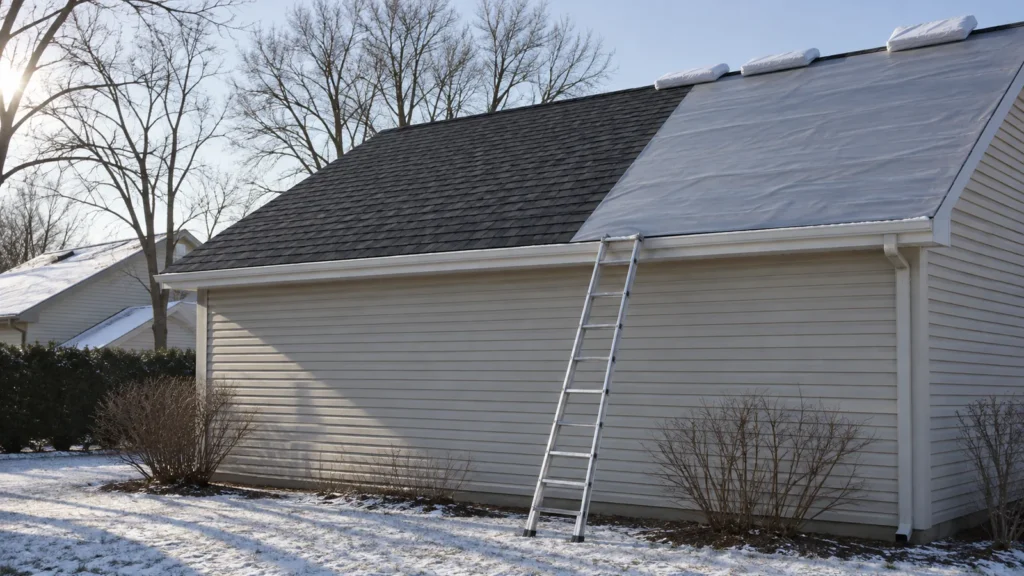
A good rule for winter work is to open only as much roof as the crew can cover before dark. No crew should leave a bare deck open overnight in winter.
Is roof replacement in winter a good idea for your home?
It depends on what your roof is doing right now.
Roof replacement in winter makes sense when the roof leaks in more than one place or the decking feels soft. It also makes sense after a storm tore off shingles.
Water that gets in during the winter does more harm with every freeze and thaw. By spring it can reach the drywall, the insulation and the framing.
Waiting makes sense when the roof is old but dry. A small repair can get a tired roof through the winter, and the full replacement can follow in spring.
Our team will tell you which one fits your roof. If the roof has years left in it, we say so.
How do Chicago winters change the plan?
Our winters swing above and below freezing over and over. A mild, sunny week in January can be a good time to put on a roof.
Snow can show up with only a day’s warning. A job planned for a dry week may move when the forecast changes.
Short days cut the working hours. In December the sun sets before five, so a winter crew has less light to work with.
Wind is the other factor. On gusty days it is hard to handle shingles and underlayment on a steep roof, and good crews wait those days out.
Nobody can promise a winter start date far ahead, because the weather decides. Be careful with any roofer who names a firm date without a plan for snow.
What should you ask a roofer before a winter job?
Ask these questions before you sign for a winter replacement. Start with the materials:
- Where will the shingles be stored before they go on the roof?
- What cold weather steps does the shingle maker list, and will you follow them?
- Will you hand seal the shingles?
Then ask about the work on the roof itself:
- How much of the roof will you open at one time?
- What happens if snow comes in the middle of the job?
- How do you check the deck once the old roof is off?
Clear answers to these show that the crew has done winter work before. If an answer comes back vague, ask for more detail.
How does our team handle a roof replacement?
We start with a look at your roof. We get up there, take photos and show you what we found before anyone talks about cost.
When it is time to replace, you get a written scope before we start. It lists the materials, the layers and what happens if we find rotted decking once the old roof is off.
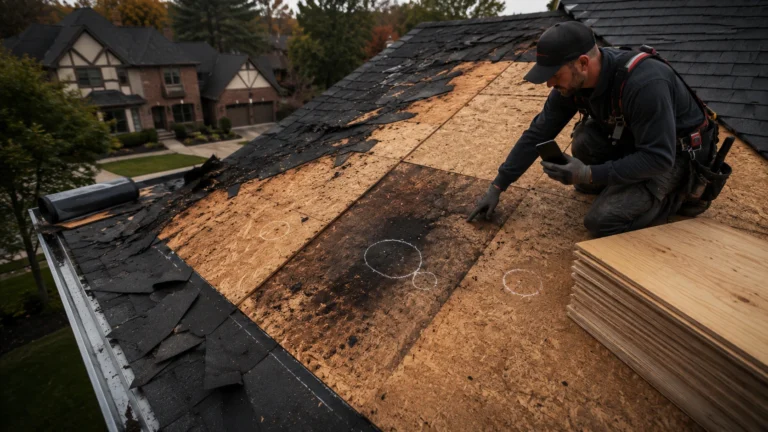
We tear the old roof off down to the deck. Next, the crew walks the deck, replaces any board that will not take a nail, and shows you the ones we pulled.
Ice and water shield goes along the eaves, in the valleys and around anything that comes through the roof. In a Midwest winter, that layer does the most work.
A synthetic underlayment covers the rest of the deck, so the roof sheds water while the job is in progress. All of the flashing goes on new.
We handle the permits and the cleanup, and one crew works your job from start to finish. Before we leave, we sweep the yard and driveway with a magnet to pick up nails.
Our roof replacement page walks through each step, from the tear off to the cleanup. Call or text (224) 518-0278 and we will come out and look at your roof.