
How much snow can a roof hold depends on two things: how heavy the snow is, and how strong that one roof is. No single number fits every house, and nobody can tell you yours from the street.
Homes built to code are designed for the snow loads set for their area. Trouble starts when the snow is heavier than it looks, piles up in one spot, or lands on a roof with a weak spot.
Below you will find what snow and ice weigh and where snow piles up. You will also find the warning signs, and how to clear a roof without getting hurt.
Why is there no single answer?
Every roof is built a little differently. The framing, the rafter spacing, the age of the wood and any old rot all change how much weight it can take.
FEMA’s Snow Load Safety Guide makes the same point. It says no two snow events are alike, and two buildings next door to each other can end up with different loads from one storm.
A “pounds per square foot” figure you read on a forum is not your roof’s number. For that, a pro has to look at the roof itself, and for big questions a structural engineer has to look at the framing.
How much does snow weigh?
More than most people guess, and the weight changes a lot from storm to storm. FEMA’s Snow Load Safety Guide gives these figures for one foot of fresh snow:
- Light, dry snow: about 3 pounds per square foot.
- Wet, heavy snow: about 21 pounds per square foot.
The depth is the same, and the wet snow weighs seven times as much. A foot of fluffy powder after a deep freeze is far lighter. The wet, sticky kind falls when it is close to 32 degrees.
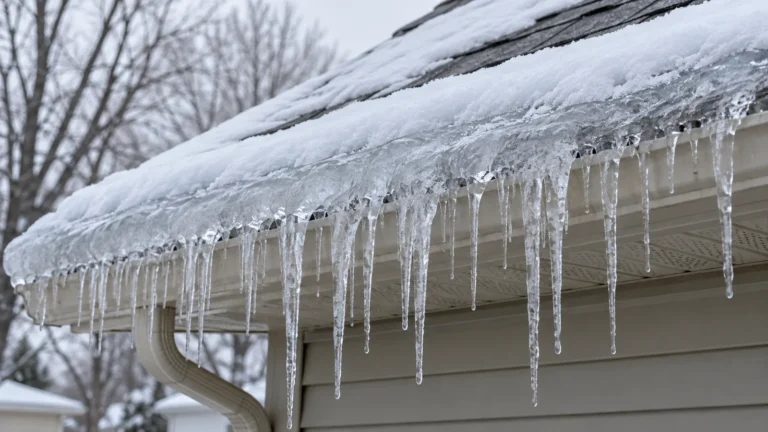
Ice weighs more again. The same FEMA guide says one inch of ice weighs a little less than 5 pounds per square foot. Inch for inch, that is heavier than wet snow.
Is a foot of snow in the yard a foot on the roof?
No. FEMA’s guide warns that one foot of snow on the ground does not always mean one foot of snow on the roof.
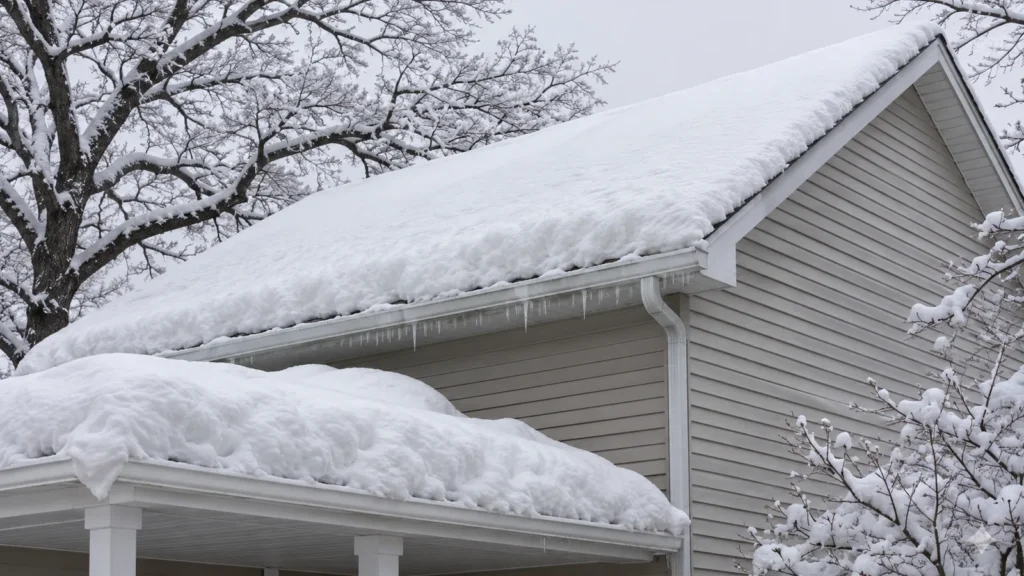
Wind, sun, the slope of the roof and heat from the house all change what ends up on top. Some roofs end up with less snow than the yard, and some spots end up with far more.
So a ruler in the yard will not tell you the load on your roof. Treat a deep snowfall as a sign that it is time to look.
Where does snow pile up on a roof?
Snow rarely lies flat and even across a whole roof. Wind and gravity move it around.
The heavy spots form here:
- Lower roofs next to a taller part of the house, where wind drops snow from above.
- Porch roofs and roofs over an entry, which FEMA’s guide names as spots where snow slides off a gable roof above.
- Valleys, where two roof slopes meet and snow collects.
Drifting snow also builds up against the side of a chimney or a dormer.
A drift puts much more weight on one small area than the rest of the roof gets. FEMA’s guide also notes that building codes only started to cover drifting and sliding snow in recent decades. Older homes may not have been designed for it.
Does rain on top of snow make it heavier?
Yes. Snow soaks up rain, and the water adds weight even though the pile looks the same.
FEMA’s guide explains that a short rain can melt part of the snow and leave the rest soaked and heavier. A day of rain and slush after a big snowfall is a good time to watch the roof closely.
Melt water that freezes again at the roof edge adds ice to the load as well.
How much snow can a roof hold in a Chicago winter?
The answer depends on the roof, the snow and the storm, and our winters bring every kind of snow. A deep cold snap drops light, dry powder, and a storm near freezing brings the wet, heavy kind.
Here in the Chicago suburbs, the temperature also swings above and below freezing over and over. Snow melts on a sunny afternoon and freezes again at night. A roof can end up with layers of snow, slush and ice from several storms.
FEMA’s guide counts a series of storms like that as one snow event. Snow from each new storm adds to the snow already on the roof.
Many homes in our area have seen decades of these winters. A small soft spot in the roof boards from an old leak becomes a weak point when the snow piles up.
What are the warning signs of too much snow?
FEMA’s guide lists signs that a roof is under too much strain. Inside the house, watch for:
- A ceiling that sags.
- Popping, cracking or creaking sounds from above.
- Doors that no longer open or close the way they did before.
New cracks in walls are a warning sign too. So is a bad leak during or right after a big snow.
From the outside, look for a roof line that dips in the middle. A gutter pulling away from the house under a load of ice is another sign of too much weight.
If you see any of these, move everyone out of the rooms under that spot. Then call a roofing contractor or a structural engineer the same day.
How can you clear snow off a roof safely?
Work from the ground, and never climb onto a snowy or icy roof. A fall from a roof edge in winter is far worse than any snow load.
Use a roof rake with a long handle and pull snow off the lower few feet of the roof. FEMA’s guide suggests a rake that is not metal, because metal rakes can damage the roofing.
Pull the snow down in thin layers and leave a little on the shingles. Do not chip at ice or scrape down to the roof, because that breaks shingles.
Look up for power lines before you lift a long rake. Clear the snow away from doors, downspouts and vents once it lands on the ground.
For a roof you cannot reach from the ground, or a big drift up high, hire a pro. FEMA’s guide recommends a professional roofing contractor who has experience removing snow from roofs.
What should you check once the snow melts?
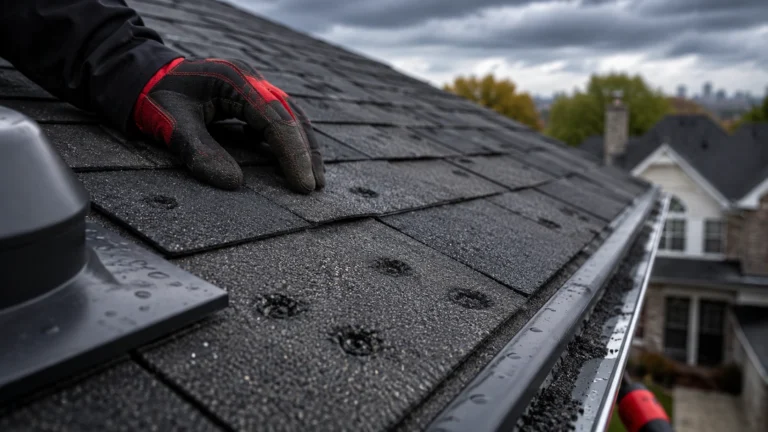
FEMA’s guide says the roof should be checked for damage after the snow comes off. Heavy snow, ice and rakes can all leave marks you cannot see from the yard.
Have a pro check the roof once it is clear and safe to walk on. A good check covers the shingles, the flashing, the valleys, the gutters and the roof edge, plus the attic when there is a way in.
Our roof inspection page explains how our team checks a roof up close, on the roof itself and in the attic when there is access. You get a written summary of what needs attention now, what to watch, and what is in good shape.
Call or text (224) 518-0278 and we will set up a time to look at your roof once the snow is off.