
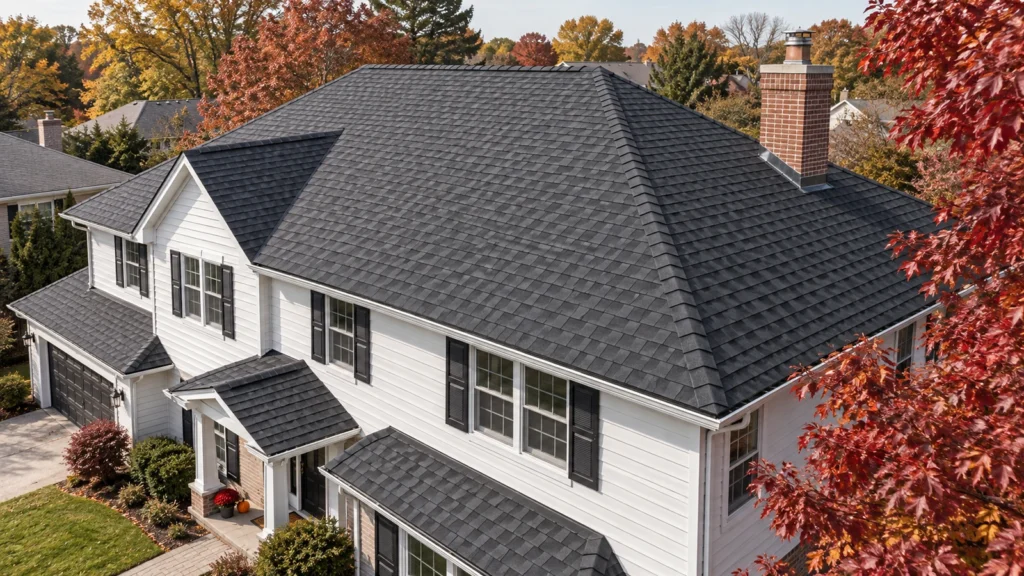
Fall is the best stretch of the year to replace a roof around the Chicago area. Temperatures land in the range asphalt shingles want.
The crews are past the worst of the summer heat, and the roof gets finished before winter arrives.
If you already suspect your roof is due, this is the window to use instead of the one to wait through.
Why does temperature change a roof install?
Because asphalt shingles are not finished when they are nailed down. They have to seal.
Every shingle has a strip of adhesive on it. Warmth from the sun softens that strip after the roof goes on, and the courses bond to each other.
The roof becomes one sealed surface instead of many separate pieces. That bond is what stops wind from getting underneath and lifting them.
Sealing needs warmth. Fall days around here deliver it. Deep winter days do not, and a roof installed in the cold can wait weeks or months for a warm enough spell.
What goes wrong in cold weather?
Three things, and none of them look alarming on the day.
Shingles get stiff and more brittle in the cold, so they crack more easily when handled and fastened. Sealant strips do not activate, so the roof goes unbonded for longer and meets winter wind that way. Snow or ice on the deck has to come off before anything goes down, which slows the work and makes the surface less safe.
None of that makes a winter roof impossible. Roofs go on in winter all the time, usually because something failed and waiting was not an option. The easy version of the job is available now, and the harder version is what January offers.
What does waiting until spring cost?
Two things, and one of them is about the house instead of the schedule.
The first is that you spend a whole winter on the roof you already decided was finished. Winter is the hardest season it faces: freeze and thaw cycling, ice in the valleys, wind and snow load. A roof that was marginal in October will not be better in March.
The second is scheduling. Spring is when everyone who made it through the winter calls, and when storm season generates its own work. Fall is a calmer stretch, so the job usually lands closer to when you want it.
Should you wait and see if a storm damages it?
No, and this is worth being direct about.
A storm does not turn a worn out roof into a covered claim. Carriers draw a line between storm damage and deferred maintenance or gradual wear. A roof already at the end of its life falls on the wrong side of it.
An insurance claim is the right route when a specific storm did specific damage to a roof that was otherwise sound. That is a different situation, and hail and wind damage are worth having looked at properly.
How do you know the roof is due?
Any one of these earns a look. Two or three together usually means replacing it costs less over the next few years than repairing it will.
- The roof is twenty years or older. Most asphalt roofs in this area start giving up past that mark.
- Shingles are curling or cracking across the whole roof instead of in one spot.
- You have had leaks in more than one place.
- Hail or wind has hit it more than once. Storm damage stacks up, even on a roof that looks fine from the street.
- Granules are filling the gutters. Granules are the shingle’s sun protection, and once enough are gone the mat underneath starts to go.
- You plan to be in the house another ten years.
How long does the job take?
Most houses are a few days once the crew is on site, weather permitting.
The part to plan around is not the tear off, it is the calendar. Fall books up as other people work out the same thing you just did. Get the inspection done now even if the work lands a few weeks out.
What to do next
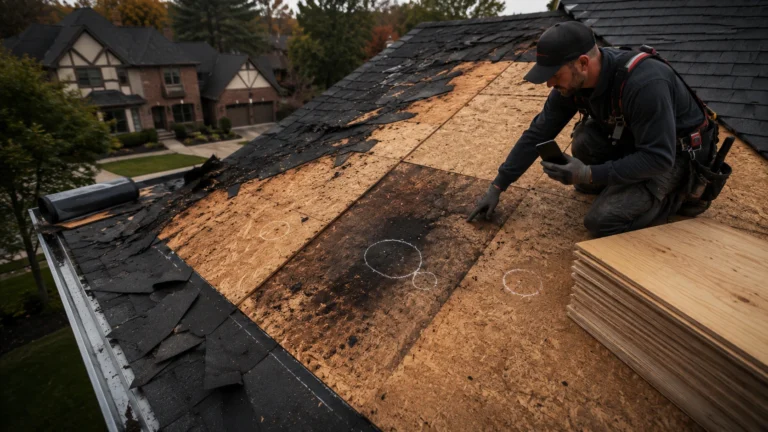
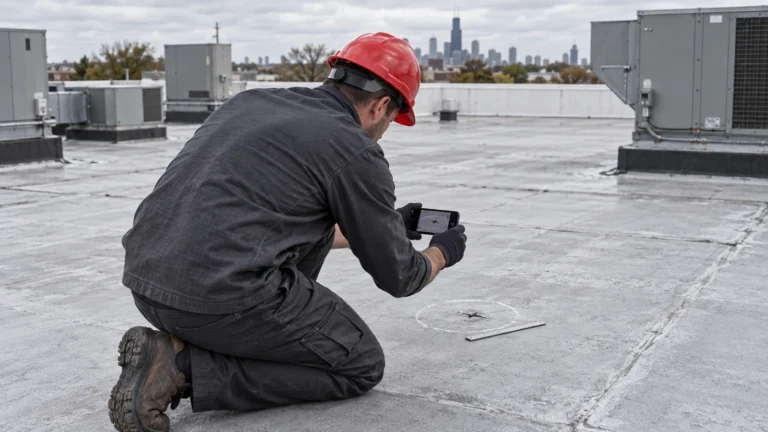
Get someone on the roof while the weather cooperates, and get the findings in writing with photos.
That is how ours goes. We get up there, take photos, and show you what we found before anyone talks about a price. If the roof has years left in it, we will tell you that instead.
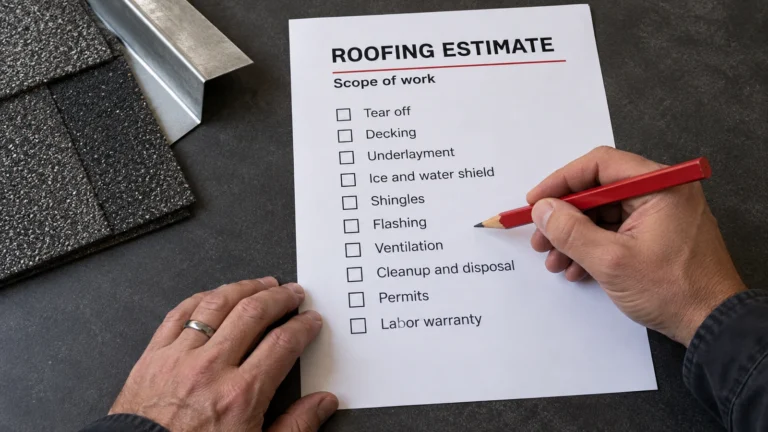
If it does not, the written scope lists the materials, the layers and what happens if we find rotted decking under the old roof.
If your roof is due, a fall roof replacement is the easiest version of this job you are going to get. Call or text us and we will come out and take a look while the weather helps.